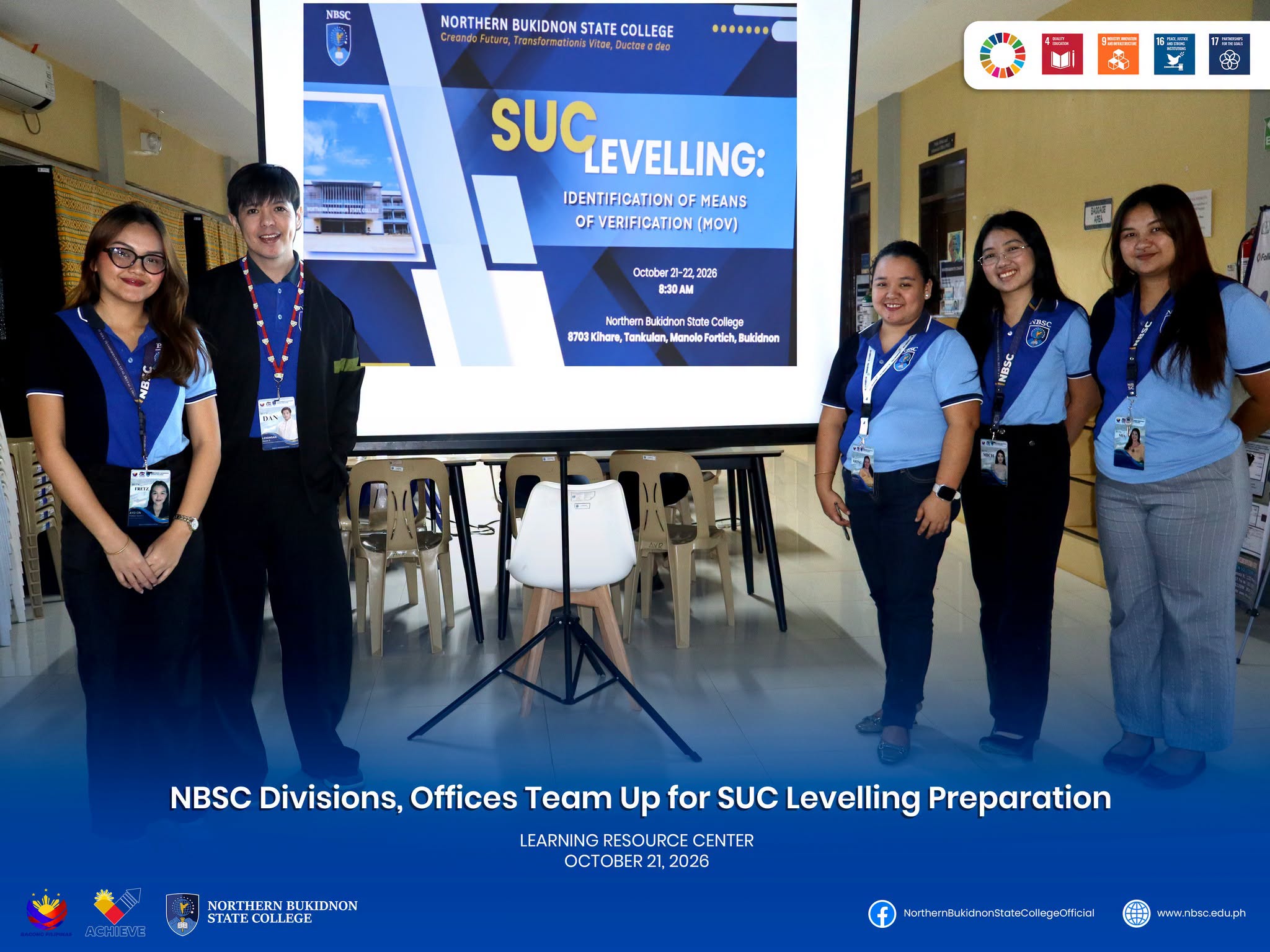

NBSC DIVISIONS, OFFICES TEAM UP FOR SUC LEVELLING PREPARATION
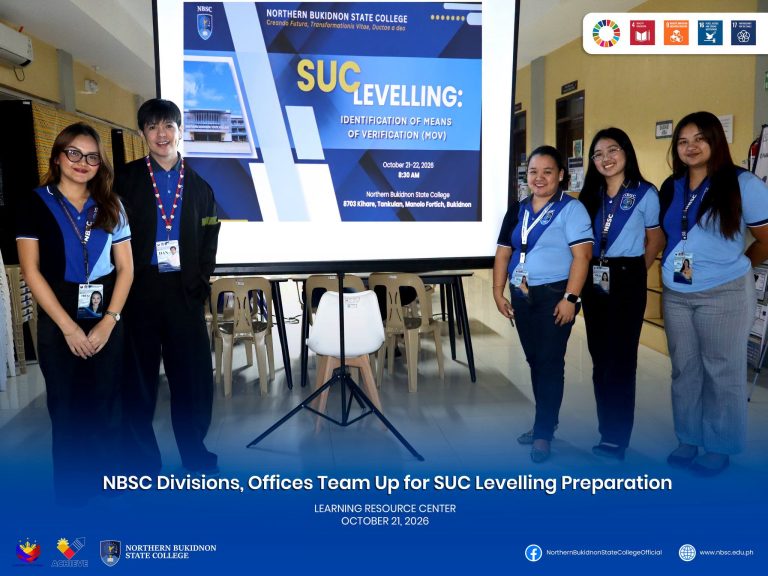
Northern Bukidnon State College (NBSC), through its Quality Assurance Office (QAO), began a two-day workshop on October 21, 2026, at the Learning Resource Center to organize and review evidence in preparation for the State Universities and Colleges (SUC) Levelling assessment of the Commission on Higher Education (CHED).
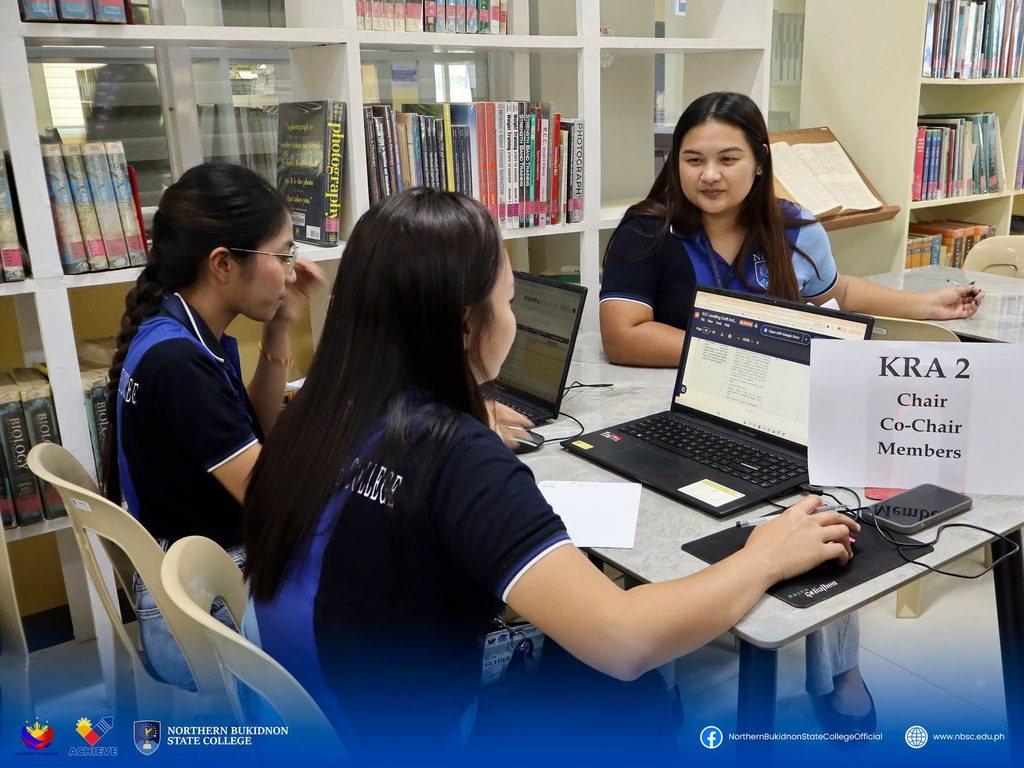
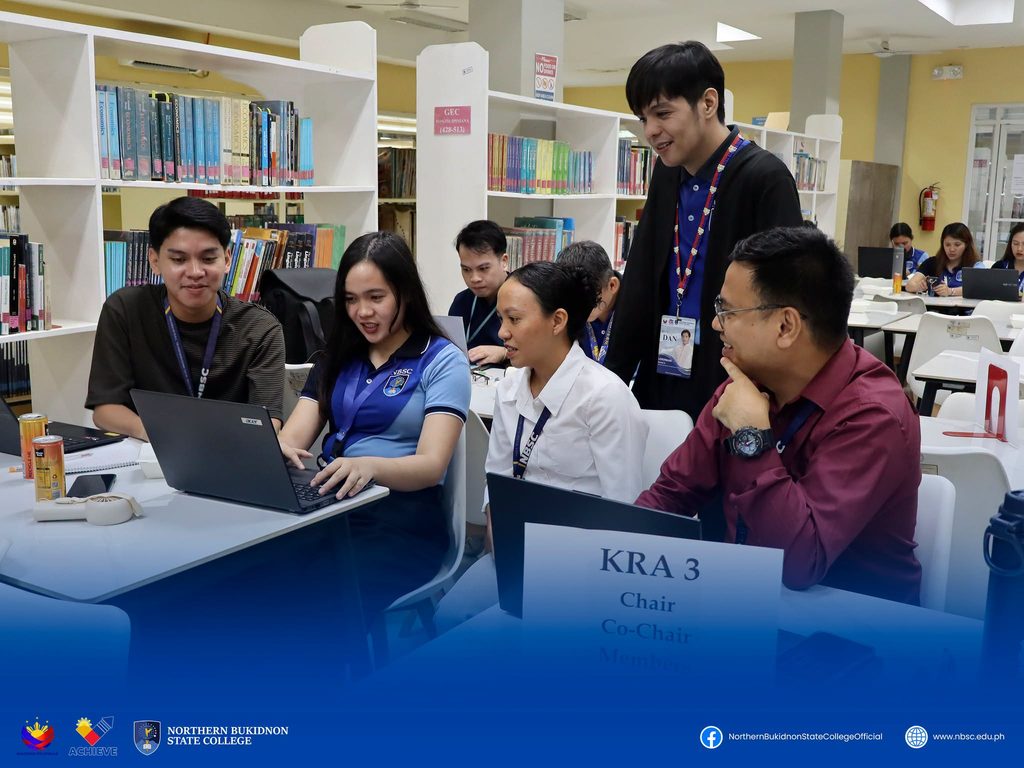
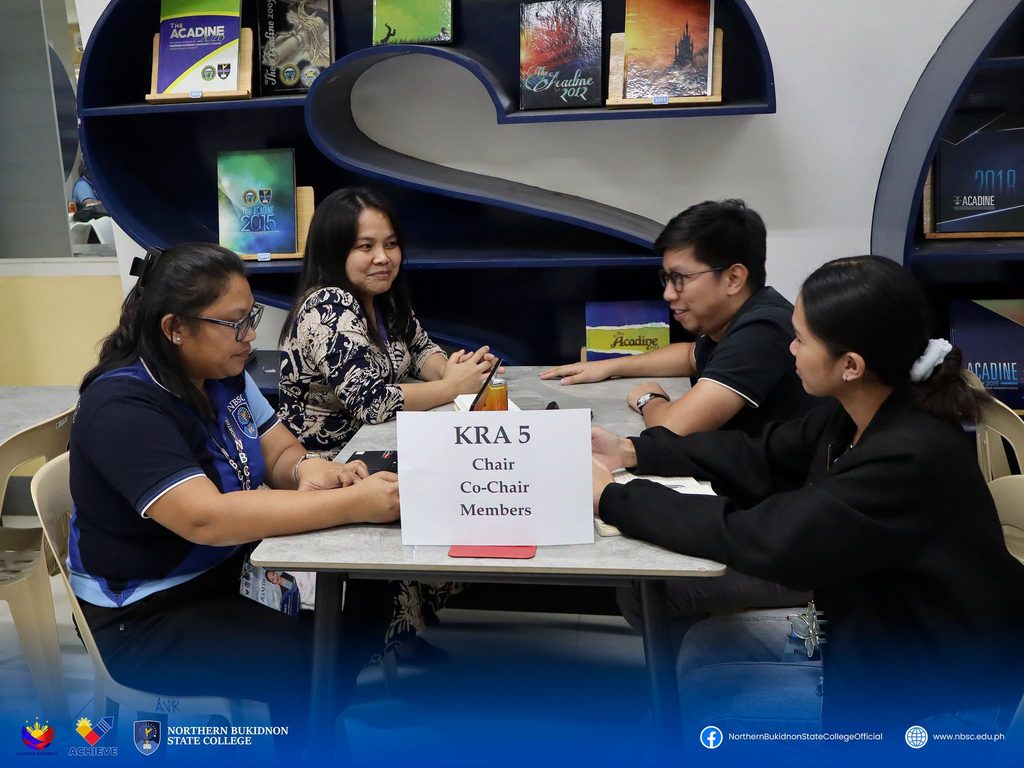
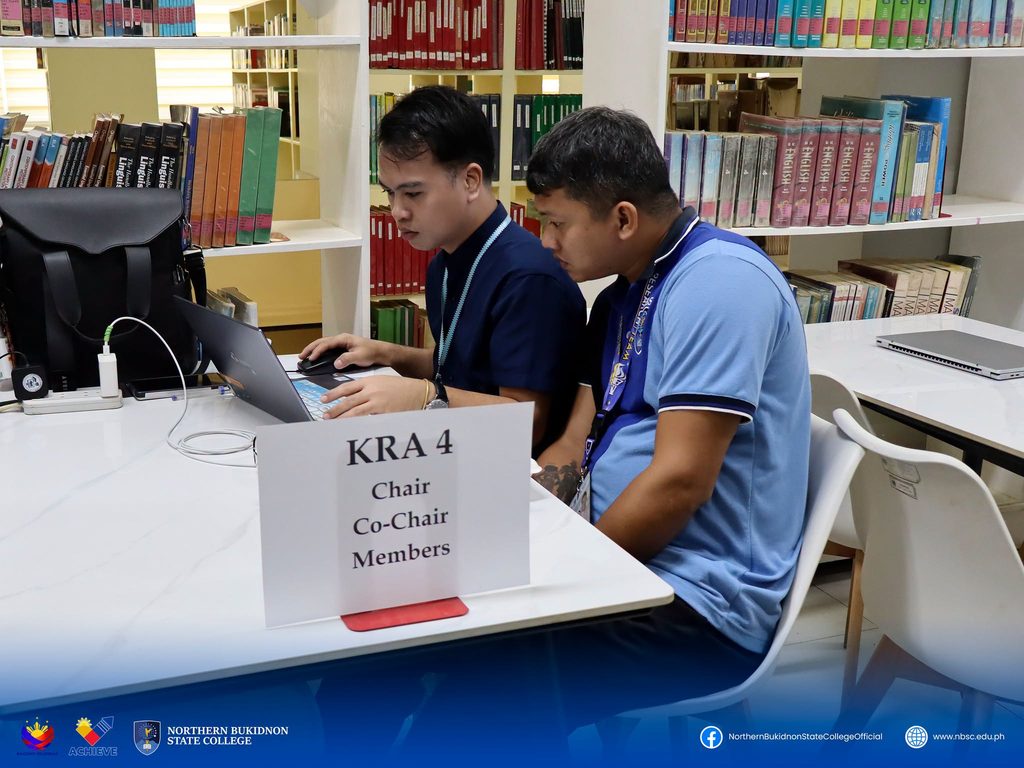
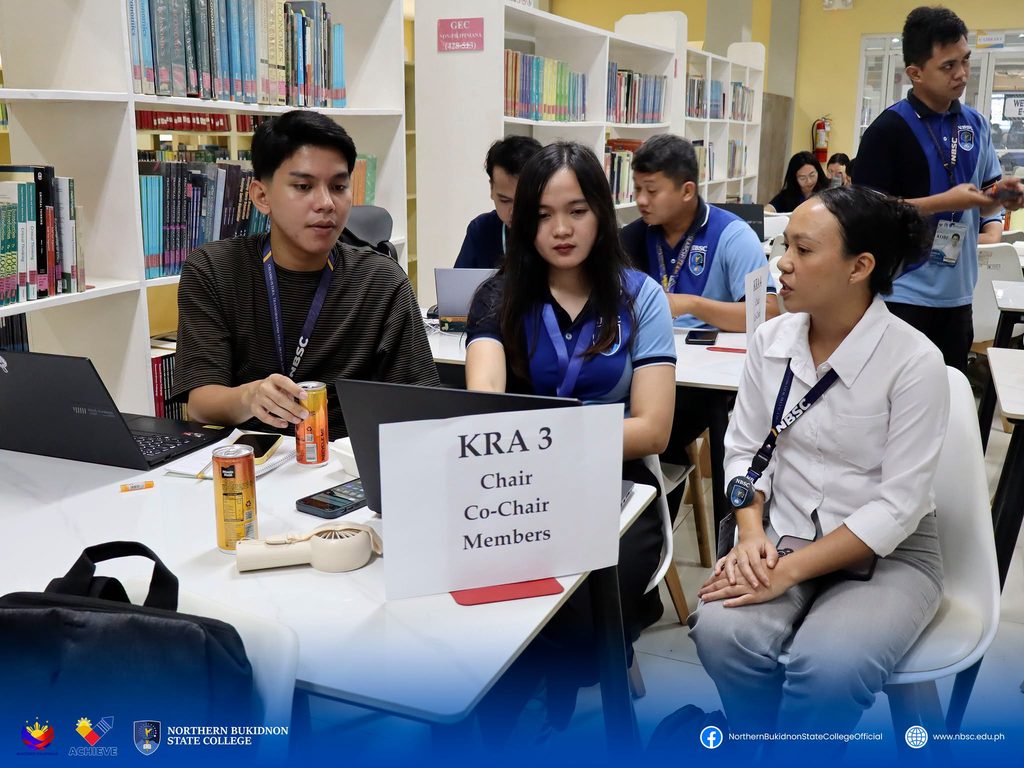
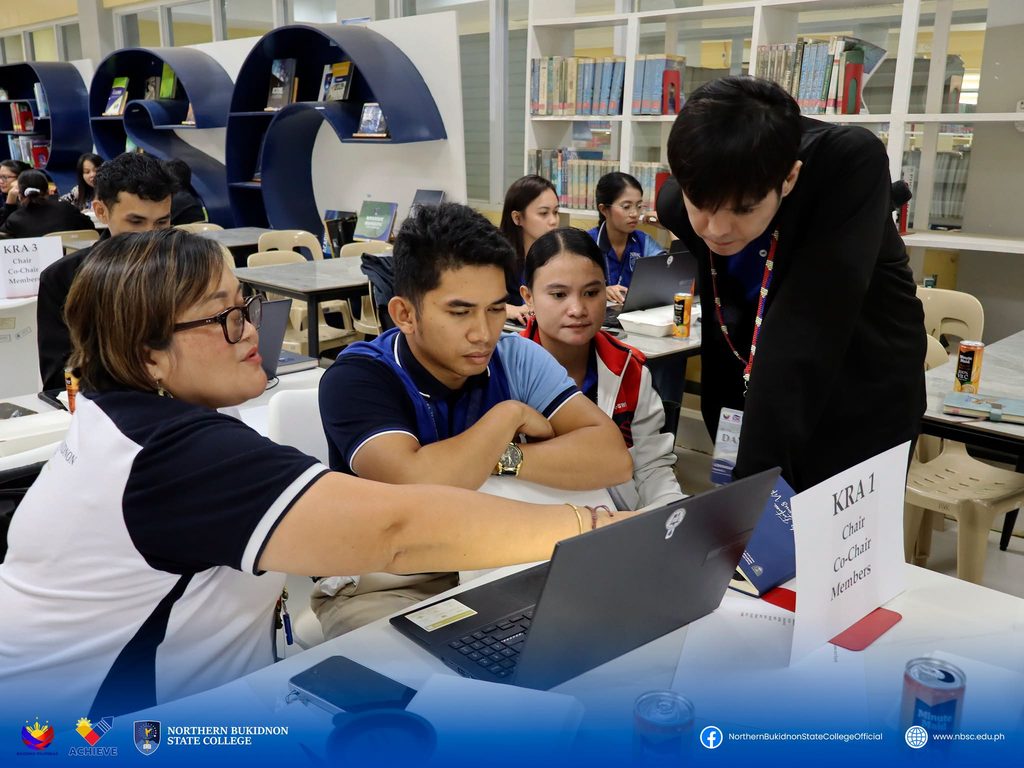
The workshop started at 9:30 a.m., with NBSC divisions and offices working in teams according to Key Result Areas (KRAs) to identify the Means of Verification (MOVs) required for each indicator. Participants formed nine groups across the five KRAs, each led by a chairperson or coordinator. Using a shared working file and a draft SUC Levelling instrument, the teams began reviewing the indicators and determining the offices responsible for providing the necessary documentation.
College President Christie Jean Villanueva-Ganiera, Ed.D., CESE, delivered the opening remarks, stressing the importance of SUC Levelling to NBSC. She also thanked employees for their participation and support of the College’s quality assurance initiatives.
QAO Head Dr. Daniel S. Lerongan then presented the rationale and objectives of the workshop. The workshop aims to:
● update the Monitoring and Evaluation for SUC Levelling and the Self-Assessment Report (SAR);
● identify the College’s existing MOVs;
● create an action plan for the missing MOVs; and
● finalize the list of committee members for SUC Levelling.
SUC Levelling is a CHED classification that scores state universities and colleges based on five KRAs, with a total of 100 points. The KRAs and their corresponding point allocations are Access and Equity (10 points), Relevance and Quality of Instruction (25), Excellence in Research and Creative Works (25), Extension Services (20), and Governance and Management of Resources (20).
The review is expected to help NBSC establish a clearer picture of its existing documentation and remaining requirements. With responsibilities identified and gaps addressed through planned actions, the College can strengthen its readiness for assessment and support continued improvements in the quality of its academic programs, research, extension services, and institutional management.
Written by: Michelle Darlyne B. Ricarte, Alliana Isa E. Vivares
Photos by: Ralph A. Bagotsay